
The basics of filtration
Filtration is one of the most frequently misunderstood basics in reef keeping. Many beginners imagine the aquarium needs a single “filter” that keeps the water clean — in reality, filtration is the cooperation of three different processes, the most important of which is not a device at all but a living community of bacteria. This article goes through what filtration in a reef aquarium really means and how its parts support one another.
The three forms of filtration
Aquarium filtration is traditionally divided into three types: mechanical, biological and chemical. They do not replace one another but handle different tasks. Mechanical removes solid particles, biological breaks down toxic nitrogen compounds, and chemical binds dissolved impurities. A stable reef aquarium relies above all on biological filtration; the other two are support measures.
Mechanical filtration
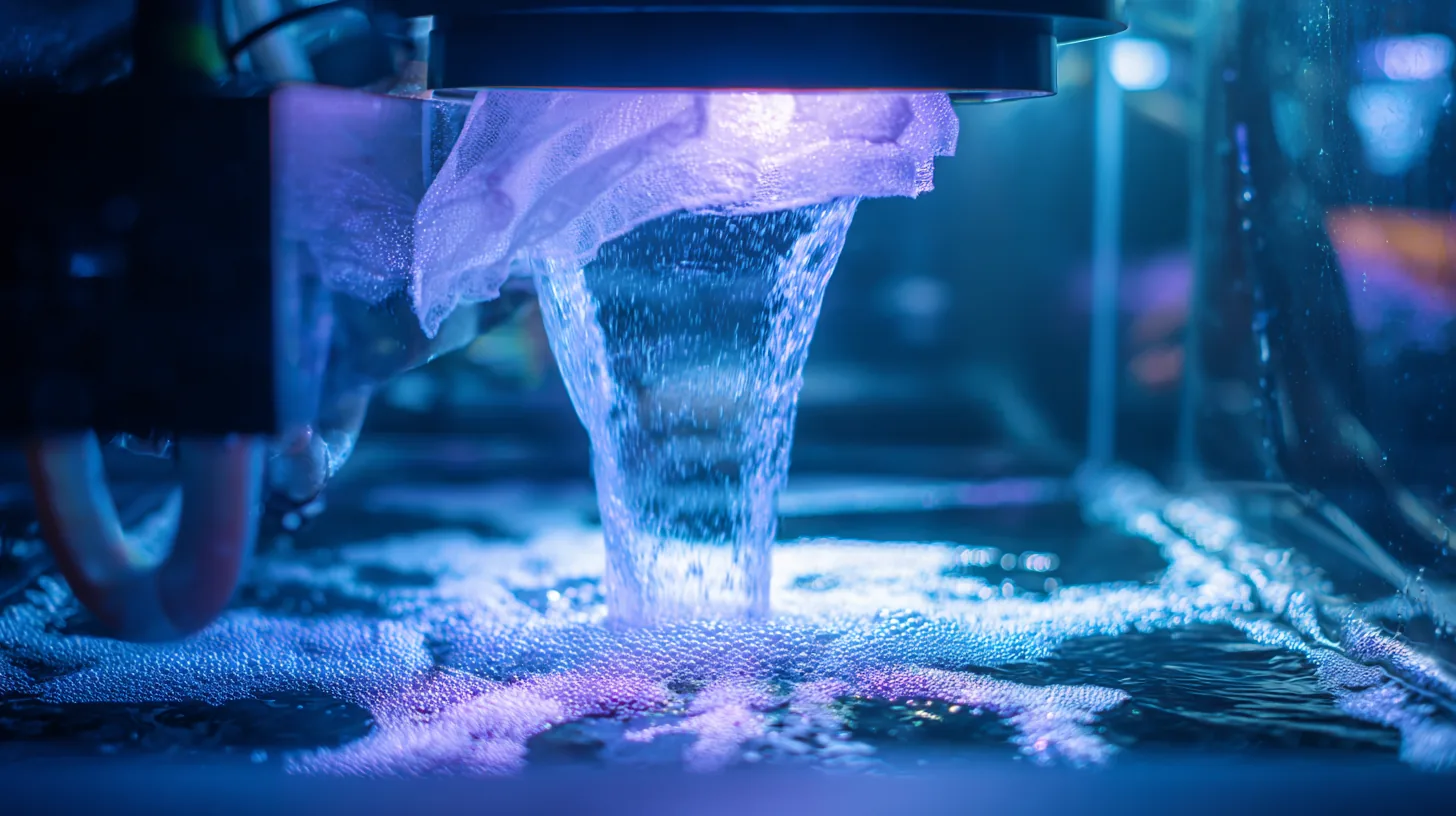
Mechanical filtration means the physical separation of solid particles floating in the water — food remains, faeces and other coarse debris — from the water. Typical tools are filter socks and sponges as well as the automatic roller filter (roller mat). Water flows through the material and the particles get caught in it.
The most important principle of mechanical filtration is that it must be removed and cleaned regularly. The filter material removes nothing permanently — it merely gathers the dirt in one place. If a dirty sock is not changed or washed, the organic matter accumulated in it begins to break down in the tank and release nutrients back into the water, turning the filter from a benefit into a burden. In practice a filter sock should be changed every few days.
Biological filtration — the heart of the system
Biological filtration is the most important part of the whole system, and it is by nature a living process. In it, bacteria break down the toxic ammonia produced by the organisms first into nitrite and then into the less toxic nitrate. This chain of events is the nitrogen cycle, and a stable population of nitrifying bacteria is an absolute prerequisite for any aquarium to survive.
In a reef aquarium the most important substrate for biological filtration is live rock — porous limestone whose vast surface area and pores provide a home for both oxygen-requiring (aerobic) and oxygen-deprived (anaerobic) bacteria. In practice all surfaces in the tank — rocks, sand and equipment — act as part of the biological filter. The oxygenated outer surfaces handle the oxidation of ammonia and nitrite, while the oxygen-free zones in the depths of the rock can break down nitrate into nitrogen gas. This biological foundation cannot be bought in a bottle or installed in a moment: it is built during cycling and strengthens over the months.
More on this topic: Live rock — the basics and Cycling process — basics.
Chemical filtration
Chemical filtration means binding dissolved, invisible substances to special materials. The most common are activated carbon, which removes colouring and organic compounds from the water, and phosphate remover (GFO, an iron-based material), which binds excess phosphate. Chemical filtration is not mandatory, but it is a useful precision tool: with it you can clarify the water, remove compounds excreted by corals, or manage a single nutrient.
The capacity of chemical materials is limited and gets used up, so they must be replaced periodically. They are best used judiciously and as needed, not continuously just in case.
More on this topic: Activated carbon in practice and Phosphate — basics.
The skimmer as part of the whole
The protein skimmer is a central piece of reef aquarium equipment that does not sit neatly in any of the three basic categories. It removes organic matter from the water before it has a chance to break down and burden the biological filtration — like mechanical and chemical filtration combined, but at the level of dissolved organic compounds. In practice a skimmer significantly lightens the load on the other filtration stages.
More on this topic: Protein skimmer in practice.
How the parts work together
In a functioning system the stages support one another as a chain. The skimmer and mechanical filtration remove the coarse and organic load before it breaks down. Whatever still breaks down ends up being handled by biological filtration, which converts the toxic nitrogen compounds into less harmful ones. Chemical filtration finally handles individual dissolved impurities or nutrients as a targeted measure.
The most common misconception is that mechanical or chemical filtration could replace biological. It cannot: without a stable bacterial community no device keeps ammonia in check. Another common mistake is to let the mechanical filter material foul, so that it begins to burden the water instead of cleaning it. A third is to imagine that nutrients should be filtered to zero — in reality corals and their symbiotic algae need a controlled, non-zero nutrient level.
The best filtration system is therefore a balanced whole in which a living biological foundation does the main work and the other stages support it. Stability and regular maintenance matter more than the power of any single device.
More on this topic: The principle of stability and The cleanup crew.
Lähdeluettelo
Harrastajakirjallisuus ja -lähteet
- Bulk Reef Supply. What Are the Three Types of Aquarium Filtration? https://www.bulkreefsupply.com/content/post/what-are-the-three-types-of-filtration
- Bulk Reef Supply. A Beginner’s Guide to Filter Media and How to Use It. https://www.bulkreefsupply.com/content/post/a-beginners-guide-to-filter-media-and-how-to-use-it
- Bulk Reef Supply. Biological Filtration: How to Grow Beneficial Bacteria for a Thriving Ecosystem in Your Aquarium. https://www.bulkreefsupply.com/content/post/md-2016-01-biological-filtration-how-to-grow-beneficial-bacteria-for-a-thriving-ecosystem-in-your-aquarium
- Reefs.com. Advanced Beginnings: The Basics of Filtration for the Reef Aquarium. https://reefs.com/advanced-beginnings-the-basics-of-filtration-for-the-reef-aquarium/
- LiveAquaria. The Importance of Filtration. https://www.liveaquaria.com/blogs/aquarium-filtration/the-importance-of-filtration
Verkkosivut
- Wikipedia. Live rock. https://en.wikipedia.org/wiki/Live_rock