Live rock — the basics
Live rock is the literal and figurative foundation of a reef aquarium. It is often the first thing brought into the tank, and it determines much of the system’s stability. Despite its name, it is not a living organism but porous limestone on whose surfaces and in whose pores an enormous microbial community lives. This article explains what live rock is, why it works, and what a beginner should know about it.
What live rock is
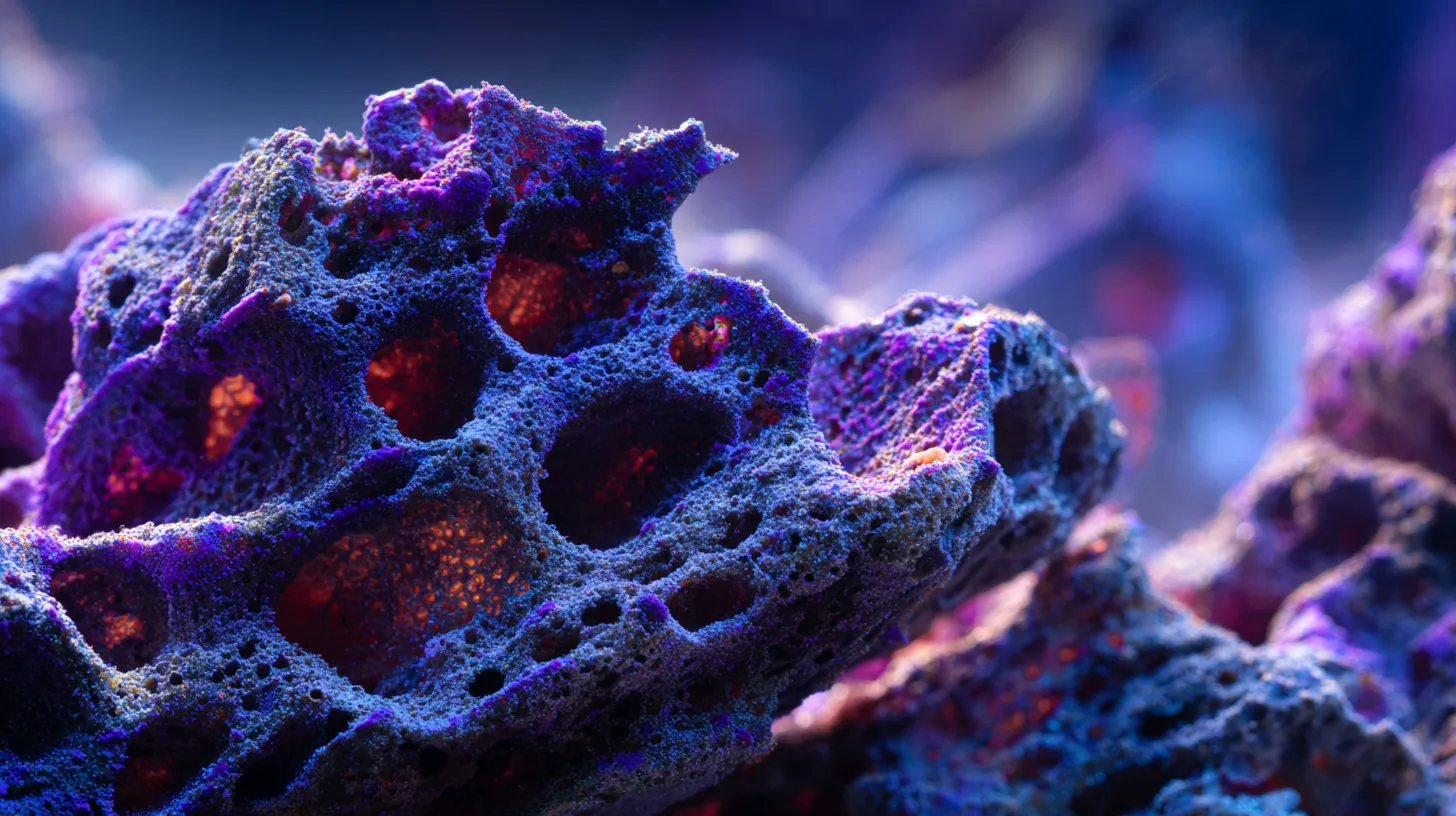
Live rock is the porous aragonite rock formed by coral reefs, which over years or decades has gathered a diverse community of organisms on its surfaces: bacteria, algae, small invertebrates and other reef life. The word “live” refers precisely to this community of organisms, not to the rock itself. When live rock is brought into an aquarium, it brings with it a ready-made biological filter.
The rock’s most important property is its porosity. The lighter and more porous the rock, the more surface area it has for bacteria — and it is precisely surface area that determines the power of biological filtration. Good-quality live rock has at least as much, often more, usable bacterial surface area than separate filtration equipment.
Why it is the foundation of biological filtration
Live rock handles all stages of the nitrogen cycle. The aerobic bacteria living on the oxygenated outer surfaces of the rock oxidise the toxic ammonia produced by the organisms first into nitrite and then into nitrate. In the depths of the rock, where oxygen barely reaches, anaerobic bacteria can in turn break down nitrate into nitrogen gas, which leaves the water. In this way one and the same rock handles both the oxidation of toxic nitrogen compounds and the removal of the end product.
This makes live rock the primary biological filter of a reef aquarium. In practice the whole rock structure — together with the sand — forms a living filtration surface that works continuously and on its own, without a separate device. As a rule of thumb, about 0.5–1 kg of rock per ten litres is typically enough for biological filtration, but modern open rock structures often use noticeably less rock for the sake of flow and appearance.
More on this topic: The basics of filtration and Cycling process — basics.
Types of rock: harvested, aquacultured and dry
Live rock is available from several different origins, each with its own benefits and drawbacks.
Harvested wild live rock is brought directly from tropical reef areas. It is biologically the richest and mature right away, but collecting it stresses natural reefs, and many countries have restricted its export. For ecological reasons it is used less and less today.
Aquacultured live rock is grown in the sea or in tanks from dry rock that is allowed to gather its community of organisms in a controlled way. It offers the benefits of live rock without stressing natural reefs, and it is now considered the most environmentally responsible option.
Dry or ceramic rock is lifeless — either old, dried reef rock or artificially manufactured porous material. It is inexpensive, clean and free of pests, but its bacterial community has to be built from scratch. This means cycling takes longer, as the bacteria must first colonise the rock from nothing. Many hobbyists today start with dry rock and “seed” it with a small amount of live rock or a bacterial culture to speed up the process.
The life that comes with live rock
Live rock brings into the aquarium plenty of life beyond bacteria. Beneficial organisms often arrive with it: small tube worms, sponges, clams, snails, crustaceans and a diverse microfauna that enriches the tank’s ecosystem and acts as part of the natural cleanup crew.
Unwanted organisms — so-called hitchhikers — can come along too, however: glass anemones (aiptasia), tube snails (vermetids), predatory worms, crabs or algae spores. New rock is therefore worth observing and, if necessary, quarantining, and corals are dipped before being moved into the tank. Hitchhikers are the flip side of live rock — the very diversity that makes it valuable also brings a risk with it.
More on this topic: Pests: aiptasia and vermetids and Coral dipping.
Amount, arrangement and handling
The rock structure is best designed open and stable: so that water can circulate freely everywhere and no stagnant, sediment-collecting pockets form. Good flow around the rock keeps both the bacterial community and the corals healthy. The sturdiness of the structure is important so that it does not collapse as the corals grow.
In handling, note that during transport or a long time in the air, part of the rock’s community of organisms may die. The rock then requires “curing” — a cleaning cure in which the dead matter breaks down in a controlled way before the rock is put into use. This is part of the normal cycling process.
More on this topic: Water flow and Substrate in practice.
Curing before use
Whether the rock is live, aquacultured or dry, it must always be cured before any animals are brought into the tank. During curing the bacterial community grows and stabilises so that it can handle the ammonia load produced by the animals. Live and aquacultured rock speed this up, because they already have a bacterial community; dry rock requires a longer time. Curing should not be rushed — a stable biological foundation is the most important investment in the whole hobby.
More on this topic: The principle of stability and The aquarium microbiome.
Lähdeluettelo
Harrastajakirjallisuus ja -lähteet
- Bulk Reef Supply. Biological Filtration: How to Grow Beneficial Bacteria for a Thriving Ecosystem in Your Aquarium. https://www.bulkreefsupply.com/content/post/md-2016-01-biological-filtration-how-to-grow-beneficial-bacteria-for-a-thriving-ecosystem-in-your-aquarium
- Reefs.com. Advanced Beginnings: The Basics of Filtration for the Reef Aquarium. https://reefs.com/advanced-beginnings-the-basics-of-filtration-for-the-reef-aquarium/
- The Biota Group. How to Cycle a Reef Aquarium. https://shop.thebiotagroup.com/blogs/news/how-to-cycle-a-reef-aquarium
Verkkosivut
- Wikipedia. Live rock. https://en.wikipedia.org/wiki/Live_rock
- Nano-Reef Community. A Guide to Reef Aquarium Cycling. https://www.nano-reef.com/articles/beginners/a-guide-to-reef-aquarium-cycling-r41/